I am returning to this blog! I've been absent too long. The life disturbances that sidetracked me are mostly resolved or gone away for now, so I want to get back on track. I've rejoined a large writers' group in which I once was active. I'm attending the weekly meetings of my small writers' group. Now I just have to get back to actual writing.
2011 was an interesting year, but also tragic.
On the interesting side, I met a writer whom I knew only through his blog -- Steve Malley. Steve's an American who's lived in New Zealand for many years. He came back to the States for a convention here in New Orleans and decided to meet up with some of his N.O. blogger friends. My group got together with him for dinner at one of our popular seafood restaurants and we had a great time. We all immediately felt comfortable with him. We wished he could've stayed in town longer so we could get together with him again. I've read Steve's book Crossroad Blues, a thriller with a touch of horror to it. Steve has a real talent for painting pictures with his words, and for sustaining suspense. The book has a very creepy killer and an interesting premise. I hope to see more of his hero character, Kane, in a future book.
On the tragic side, my mother died in August, aged 87. I want to post a tribute to her, but haven't felt ready to do it yet. I'll put it up one day soon. Another tragic event occurred, but I can't speak of that yet.
It's a new year, and I've always loved the idea of New Year's Resolutions. Although I haven't made any formal ones so far this year, I've made "change your life" my motto for the year.
Showing posts with label Writing. Show all posts
Showing posts with label Writing. Show all posts
Monday, February 20, 2012


Sunday, July 17, 2011
Storywonk Story Generator
Having trouble coming up with a good idea for a new story or book? Try Storywonk's Story Generator.
Here are a couple of ideas it gave me tonight:
Beaucoup entertainment for any writer!
Here are a couple of ideas it gave me tonight:
He's a psychotic fashion designer with an MBA from Harvard; she's a charismatic geek with an attractive smile. Together, they must learn to use their special powers before midnight.
He's a selfish con artist with no sense of humor; she's a respected millionaire with one leg. Together, they must put on a show in the midst of a farce.
Beaucoup entertainment for any writer!
(The site owners do warn: The small print: the StoryWonk Story Generator is not intended for serious use, and the StoryWonk minions are not responsible for any distraction, insomnia, skin rashes or fantastic novels which may result from its use.)
Saturday, October 31, 2009
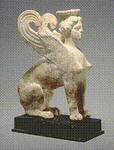
It's Halloween and the Sphinx has flown back!

It's been so long since I've appeared in Blogworld, I can't resist jumping out tonight to say BOO!
I won't yada-yada-yada the story why the blog's been on hiatus for so long. I'll just say this has been a very eventful year for me.
Years ago, a very productive author gave me some good advice. Asked about plotting, he said, "What is plot? Why, it's just one damn thing after another."
If that's the test, my life this past year could be the plot of a book.
On a forward-looking note, any day now I shall become a grandmother. My daughter (Sphinx Link) will be presenting me with a grandson. I plan to call him Sphinx Inkling.
The photo has nothing to do with my lengthy blogsilence, but it's funny.
Tuesday, December 09, 2008
Five Writing Strengths

A long time ago Shauna Roberts tagged me for a writing meme: to list five of my writing strengths. It would be easier to list five writing weaknesses, but I finally came up with these:
1. Excellent command of punctuation, spelling, and sentence structure, as well as large vocabulary.
2. Widely read in fiction, especially genre fiction, resulting in broad knowledge of literary conventions and reader expectations on which to draw for own writing.
3. Instinctive grasp of good writing style.
4. Good at analyzing facts and setting them out in readable fashion (a skill more useful in writing nonfiction than fiction.)
5. Ear for lyrical language.
Whew. I'm cringing. Too much training in self-deprecation, not enough in self-praise. Better post this before I change my mind and erase everything!
Wednesday, August 13, 2008
On Crusie's "The Double-Edged Blog"
(Yikes, two posts back-to-back! Is the world ending?)
I just read Jenny Crusie's latest entry on Argh Ink, "The Double-Edged Blog." Jenny's a best-selling author of women's fiction, known for her great sense of humor. She blogs about her works-in-progress, the businesses of writing and publishing, and life in general. She's found that while her blog gives her a chance to express herself freely on topics beyond her writing, it also results in the occasional flame-war from readers who don't like her opinions. She analogizes blogging to a double-edged sword:
I always enjoy Jenny's blog entries, whether or not I share her point-of-view on certain issues. I'm baffled by the people who incite flame-wars because someone has an opinion that differs from theirs. Or, even worse, those who begin online campaigns against a particular writer because they don't like his/her point of view.
Jennie's blog entry is well worth reading, especially for anyone who's had a similar blog-experience. Several of the comments following it are thought-provoking, too.
As Jenny says:
I just read Jenny Crusie's latest entry on Argh Ink, "The Double-Edged Blog." Jenny's a best-selling author of women's fiction, known for her great sense of humor. She blogs about her works-in-progress, the businesses of writing and publishing, and life in general. She's found that while her blog gives her a chance to express herself freely on topics beyond her writing, it also results in the occasional flame-war from readers who don't like her opinions. She analogizes blogging to a double-edged sword:
I found out that blogs were a chance to say anything I wanted and I was hooked. For awhile, everything was lovely, and then I posted something a lot of people didn’t like. I can’t remember what it was now, but it was the first time somebody said to me, “You know, you should stop blogging, it’s going to hurt your career.” I said, “How is that possible?” and she said, “If they don’t like what you say on your blog, they’ll stop buying your books.” That was incomprehensible to me then, and it’s still puzzling to me now. ...Then I tripped again, this time because I was thoughtless (this happens a lot). One of my friends got a ludicrous letter from a reader and I posted it with her first name on it. That was flat out wrong of me, and I did apologize and take the name off the blog but basically, I screwed up. First lesson: Never blog when you’re really angry but not admitting it to yourself. Practical application: Wait twenty-four hours before you post something you’ve written.
Then while I was being careful on Argh–well, careful for me–I lost my temper on somebody else’s blog and became The Author Who Is Pro-Plagiarism (because that was more fun for people to get upset about than The Author Who Thinks This Is Being Handled Badly and People Should Stop Author-Bashing Until They Know the Facts). This annoyed some people so much that they’re still mad at me; some of them cornered Bob [Mayer, Crusie's co-author on a couple of books] at Thrillerfest to tell him just how awful I am, as if he didn’t know the black depths of my heart already. And of course, they’re never going to read me again. (Actually my fave comment about the whole mess was on another blog: a reader said she was never going to read me again and then followed it up by saying she’d never read me before either. I kept thinking of the old “Doctor, will I be able to play the piano after my broken arm heals?”/”Of course”/”Funny, I couldn’t play it before” joke, but that’s probably just more evidence of how depraved I am.)
I always enjoy Jenny's blog entries, whether or not I share her point-of-view on certain issues. I'm baffled by the people who incite flame-wars because someone has an opinion that differs from theirs. Or, even worse, those who begin online campaigns against a particular writer because they don't like his/her point of view.
Jennie's blog entry is well worth reading, especially for anyone who's had a similar blog-experience. Several of the comments following it are thought-provoking, too.
As Jenny says:
I feel strongly that anybody who evaluates the rest of the people in the world by how closely their attitudes and statements agree with her worldview is in danger of structuring a life much like the Alberto Gonzales Justice Department. We don’t learn from the people who agree with us, we learn from the people who make us say, “Wait a minute,” and that learning goes both ways. I learn a lot from the critics who intelligently analyze my books and find them wanting; I’ve also learned a lot from the people who have thoughfully and calmly disagreed with me on this blog. Haven’t learned a thing from the shriekers and condemners, though.
Thursday, May 22, 2008
The Awful Truth
Kassia Krozser of Booksquare and Dan Green of The Reading Experience are engaged in a provocative dispute about the need for authors to market their own books. See Kassia's "Not a Formula for Success," Dan's "Living on Earth," and Kassia's riposte, "Life on Venus: Authors Do Market."
I know dozens of writers, both published and unpublished. What surprises them most when their first books are published is learning they'll be responsible for most--or all--of the promotion and marketing.
As aspiring ("pre-published") writers, we all imagined we'd merely need to complete the manuscript. Once we signed that book contract, maybe we'd have to make a few changes here and there based on the editorial letter. After that, however, we would move on to our next manuscript. The publisher would take care of actually selling the book to retail outlets and readers.
T''ain't so. The Awful Truth is that publishers' promotional and marketing resources are allocated to the authors who bring in the most money...i.e., those who are already big sellers. You know, your Stephen Kings, your James Pattersons, your Mary Higgins Clarks.
The average writer is a peon--very low on the list for services from the publisher.
Thus it is that the typical novelist--probably an introvert, almost certainly someone who hates the idea of "selling" anything to anybody--has to get out and beat the streets (and Internet pathways) to promote and market his/her book.
Sigh. Yet another note of harsh reality intruding into our fantasy worlds.
I know dozens of writers, both published and unpublished. What surprises them most when their first books are published is learning they'll be responsible for most--or all--of the promotion and marketing.
As aspiring ("pre-published") writers, we all imagined we'd merely need to complete the manuscript. Once we signed that book contract, maybe we'd have to make a few changes here and there based on the editorial letter. After that, however, we would move on to our next manuscript. The publisher would take care of actually selling the book to retail outlets and readers.
T''ain't so. The Awful Truth is that publishers' promotional and marketing resources are allocated to the authors who bring in the most money...i.e., those who are already big sellers. You know, your Stephen Kings, your James Pattersons, your Mary Higgins Clarks.
The average writer is a peon--very low on the list for services from the publisher.
Thus it is that the typical novelist--probably an introvert, almost certainly someone who hates the idea of "selling" anything to anybody--has to get out and beat the streets (and Internet pathways) to promote and market his/her book.
Sigh. Yet another note of harsh reality intruding into our fantasy worlds.
Sunday, March 30, 2008
2008 Hugo Awards Finalists
 The World Science Fiction Society (WSFS) is an unincorporated society which sponsors the annual World Science Fiction Convention (Worldcon) and the Hugo Awards. The Hugo Awards, given annually since 1955, are science fiction’s most prestigious award. The Hugos are voted on by the thousands of members of the current Worldcon which is also responsible for administering them. Winners will be announced and trophies awarded at the Hugo Awards Ceremony at Denvention 3, the 66th World Science Fiction Convention, on Saturday, August 9.
Best Novel
- The Yiddish Policemen’s Union by Michael Chabon (HarperCollins; Fourth Estate)
- Brasyl by Ian McDonald (Gollancz; Pyr)
- Rollback by Robert J. Sawyer (Tor; Analog 10/06-1-2/07)
- The Last Colony by John Scalzi (Tor)
- Halting State by Charles Stross (Ace)
Best Novella
- “The Fountain of Age” by Nancy Kress (Asimov’s 7/07)
- “Recovering Apollo 8” by Kristine Kathryn Rusch (Asimov’s 2/07)
- “Stars Seen Through Stone” by Lucius Shepard (F&SF 7/07)
- “All Seated on the Ground” by Connie Willis (Asimov’s 12/07; Subterranean Press)
- “Memorare” by Gene Wolfe (F&SF 4/07)
Best Novelette
- “The Cambist and Lord Iron: a Fairytale of Economics” by Daniel Abraham (Logorrhea, ed. John Klima, BantamSpectra)
- “The Merchant and the Alchemist’s Gate” by Ted Chiang (Subterranean Press, F&SF Sept. 2007)
- “Dark Integers” by Greg Egan (Asimov’s 10/07)
- “Glory” by Greg Egan (The New Space Opera, ed. Gardner Dozois and Jonathan Strahan, HarperCollins/Eos)
- “Finisterra” by David Moles (F&SF 12/07)
Best Short Story
- “Last Contact” by Stephen Baxter (The Solaris Book of New Science Fiction, ed. George Mann, Solaris)
- “Tideline” by Elizabeth Bear (Asimov’s 6/07)
- “Who’s Afraid of Wolf 359?” by Ken MacLeod (The New Space Opera, ed. Gardner Dozois & Jonathan Strahan, HarperCollins/Eos)
- “Distant Replay” by Mike Resnick (Asimov’s 4/07)
- “A Small Room in Koboldtown” by Michael Swanwick (Asimov’s 4/07; The Dog Said Bow-Wow, Tachyon)
Best Related Book
- The Company They Keep: C.S. Lewis and J.R.R. Tolkien as Writers in Community by Diana Glyer; appendix by David Bratman (Kent State University)
- Breakfast in the Ruins: Science Fiction in the Last Millennium by Barry Malzberg (Baen)
- Emshwiller: Infinity x Two by Luis Ortiz, intro. by Carol Emshwiller, fwd. by Alex Eisenstein (Nonstop)
- Brave New Words: The Oxford Dictionary of Science Fiction by Jeff Prucher (Oxford University Press)
- The Arrival by Shaun Tan (Arthur A. Levine/Scholastic)
Best Dramatic Presentation, Long Form
- Enchanted
Written by Bill Kelly
Directed by Kevin Lima (Walt Disney Pictures) - The Golden Compass
Written by Chris Weitz
Based on the novel by Philip Pullman
Directed by Chris Weitz (New Line Cinema) - Heroes, Season 1
Created by Tim Kring (NBC Universal Television and Tailwind Productions)
Written by Tim Kring, Jeph Loeb, Bryan Fuller, Michael Green, Natalie Chaidez, Jesse Alexander, Adam Armus, Aron Eli Coleite, Joe Pokaski, Christopher Zatta, Chuck Kim.
Directed by David Semel, Allan Arkush, Greg Beeman, Ernest R. Dickerson, Paul Shapiro, Donna Deitch, Paul A. Edwards, John Badham, Terrence O'Hara, Jeannot Szwarc, Roxann Dawson, Kevin Bray, Adam Kane - Harry Potter and the Order of the Phoenix
Written by Michael Goldenberg
Based on the novel by J.K. Rowling
Directed by David Yates (Warner Bros.) - Stardust
Written by Jane Goldman & Matthew Vaughn
Based on the novel by Neil Gaiman
Directed by Matthew Vaughn (Paramount Pictures)
Best Dramatic Presentation, Short Form
- Battlestar Galactica “Razor”
Written by Michael Taylor
Directed by Félix Enríquez Alcalá and Wayne Rose (Sci Fi Channel) (televised version, not DVD) - Doctor Who “Blink”
Written by Stephen Moffat
Directed by Hettie Macdonald (BBC) - Doctor Who “Human Nature” / “Family of Blood”
Written by Paul Cornell
Directed by Charles Palmer (BBC) - Star Trek New Voyages “World Enough and Time”
Written by Michael Reaves & Marc Scott Zicree
Directed by Marc Scott Zicree (Cawley Entertainment Co. and The Magic Time Co.) - Torchwood “Captain Jack Harkness”
Written by Catherine Tregenna
Directed by Ashley Way (BBC Wales)
Best Professional Editor, Long Form
- Lou Anders (Pyr)
- Ginjer Buchanan (Ace/Roc)
- David G. Hartwell (Tor/Forge)
- Beth Meacham (Tor)
- Patrick Nielsen Hayden (Tor)
Best Professional Editor, Short Form
- Ellen Datlow (The Year’s Best Fantasy and Horror (St. Martin’s), Coyote Road (Viking), Inferno (Tor))
- Stanley Schmidt (Analog)
- Jonathan Strahan (The New Space Opera (HarperCollins/Eos), The Best Science Fiction and Fantasy of the Year: Volume 1 (Night Shade), Eclipse One (Night Shade))
- Gordon Van Gelder (The Magazine of Fantasy and Science Fiction)
- Sheila Williams (Asimov’s Science Fiction)
Best Professional Artist
- Bob Eggleton (Covers: To Outlive Eternity and Other Stories (Baen), Ivory (Pyr), and The Taint and Other Novellas (Subterranean))
- Phil Foglio (Cover: Robert Asprin’s Myth Adventures, Vol. 2 (Meisha Merlin), What’s New (Dragon Magazine Aug. 2007, Girl Genius Vol. 6-Agatha Heterodyne & the Golden Trilobite (Airship Entertainment ))
- John Harris (Covers: Spindrift (Ace), Old Man's War (Tor, pb), The Last Colony (Tor))
- Stephan Martiniere (Covers: Brasyl (Pyr), Mainspring (Tor), The Dragons of Babel (Tor))
- John Picacio (Covers: Fast Forward 1 (Pyr), Time’s Child (HarperCollins/Eos), A Thousand Deaths (Golden Gryphon))
- Shaun Tan
Best Semiprozine
- Ansible, edited by David Langford
- Helix, edited by William Sanders and Lawrence Watt-Evans
- Interzone, edited by Andy Cox
- Locus, edited by Charles N. Brown, Kirsten Gong-Wong, Liza Groen Trombi
- New York Review of Science Fiction, edited by Kathryn Cramer, Kristine Dikeman, David G. Hartwell, Kevin J. Maroney
Best Fanzine
- Argentus, edited by Steven H Silver
- Challenger, edited by Guy Lillian III
- Drink Tank, edited by Chris Garcia
- File 770, edited by Mike Glyer
- PLOKTA, edited by Alison Scott, Steve Davies, and Mike Scott
Best Fan Writer
- Chris Garcia
- David Langford
- Cheryl Morgan
- John Scalzi
- Steven H Silver
Best Fan Artist
- Brad Foster
- Teddy Harvia
- Sue Mason
- Steve Stiles
- Taral Wayne
John W. Campbell Award (An award for the best new writer whose first work of science fiction or fantasy appeared during 2006 or 2007 in a professional publication. Sponsored by Dell Magazines.)
- Joe Abercrombie (2nd year of eligibility)
- Jon Armstrong (1st year of eligibility)
- David Anthony Durham (1st year of eligibility)
- David Louis Edelman (2nd year of eligibility)
- Mary Robinette Kowal (2nd year of eligibility)
- Scott Lynch (2nd year of eligibility)
From http://www.denvention.org/hugos and http://www.thehugoawards.org/?page_id=2
Wednesday, March 19, 2008
Diggin' Poetry with the Rest of You
Lately several of my favorite bloggers have posted about poetry. I generally tell people I don't like poetry--I got burned out on it in my long-ago years as an English major in college. I don't read it as a leisure activity. Yet at times of high emotion or tragedy, I've found myself writing poetry. Poetry is the highest expression of the art of language, and good poets are the most skillful users of language. Perhaps at times that have intense meaning for us, we need to express ourselves within the discipline of poetry.
I recall several poems from my college years. My all-time favorite is "Dover Beach" by Matthew Arnold, which I reproduce here. (It's long out of copyright because Arnold died 120 years ago.) It's easy to find on the Internet; I got it from http://www.bartleby.com/42/705.html.
Dover Beach
by Matthew Arnold (1822–1888)
The sea is calm to-night,
The tide is full, the moon lies fair
Upon the straits;—on the French coast the light
Gleams and is gone; the cliffs of England stand,
Glimmering and vast, out in the tranquil bay.
Come to the window, sweet is the night air!
Only, from the long line of spray
Where the sea meets the moon-blanch’d land,
Listen! you hear the grating roar
Of pebbles which the waves draw back, and fling,
At their return, up the high strand.
Begin, and cease, and then again begin,
With tremulous cadence slow, and bring
The eternal note of sadness in.
Sophocles long ago
Heard it on the Ægæan, and it brought
Into his mind the turbid ebb and flow
Of human misery; we
Find also in the sound a thought,
Hearing it by this distant northern sea.
The Sea of Faith
Was once, too, at the full, and round earth’s shore
Lay like the folds of a bright girdle furl’d.
But now I only hear
Its melancholy, long, withdrawing roar,
Retreating, to the breath
Of the night-wind, down the vast edges drear
And naked shingles of the world.
Ah, love, let us be true
To one another! for the world, which seems
To lie before us like a land of dreams,
So various, so beautiful, so new,
Hath really neither joy, nor love, nor light,
Nor certitude, nor peace, nor help for pain;
And we are here as on a darkling plain
Swept with confused alarms of struggle and flight,
Where ignorant armies clash by night.
I recall several poems from my college years. My all-time favorite is "Dover Beach" by Matthew Arnold, which I reproduce here. (It's long out of copyright because Arnold died 120 years ago.) It's easy to find on the Internet; I got it from http://www.bartleby.com/42/705.html.
Dover Beach
by Matthew Arnold (1822–1888)
The sea is calm to-night,
The tide is full, the moon lies fair
Upon the straits;—on the French coast the light
Gleams and is gone; the cliffs of England stand,
Glimmering and vast, out in the tranquil bay.
Come to the window, sweet is the night air!
Only, from the long line of spray
Where the sea meets the moon-blanch’d land,
Listen! you hear the grating roar
Of pebbles which the waves draw back, and fling,
At their return, up the high strand.
Begin, and cease, and then again begin,
With tremulous cadence slow, and bring
The eternal note of sadness in.
Sophocles long ago
Heard it on the Ægæan, and it brought
Into his mind the turbid ebb and flow
Of human misery; we
Find also in the sound a thought,
Hearing it by this distant northern sea.
The Sea of Faith
Was once, too, at the full, and round earth’s shore
Lay like the folds of a bright girdle furl’d.
But now I only hear
Its melancholy, long, withdrawing roar,
Retreating, to the breath
Of the night-wind, down the vast edges drear
And naked shingles of the world.
Ah, love, let us be true
To one another! for the world, which seems
To lie before us like a land of dreams,
So various, so beautiful, so new,
Hath really neither joy, nor love, nor light,
Nor certitude, nor peace, nor help for pain;
And we are here as on a darkling plain
Swept with confused alarms of struggle and flight,
Where ignorant armies clash by night.
Tuesday, December 11, 2007
Pantsing to the Max: The Dickens Challenge
 I've posted several times on the Plotter versus Pantser styles of writing. Recently I invited multi-published author Timothy Hallinan to guest on my blog, and he wrote an excellent entry on how a pantser writes a book proposal. I first learned of Tim on reading an excellent article he wrote for The Internet Writing Journal, called To Outline or Not to Outline--a big issue for pantsers, who generally are uncomfortable with extensive advance plotting of their books.
Now Tim Hallinan writes to me with an interesting proposal for courageous pantsers:
Hi, Sphinx Ink --
If you get a chance, look at my latest blog at http://www.timothyhallinan.com/blog/?p=64.
It issues a challenge to writers to do what Dickens did, and post a chapter at a time AS THEY WRITE THE NOVEL, meaning it's pantsing to the max.I've said I'll attempt it if two other people are crazy enough to join me.
Is this something you'd like either to attempt or to share with your blog community? I'm sending it to half a dozen writers with sites and also posting it on Crimespace.
Let me know.
Tim
What say ye, O bold and faithful pantsers? Shall ye try your hands at this experiment? Can you emulate Charles Dickens, whose chapters were printed week-by-week in the newspaper as he wrote them?
Visit Tim's blog and let him know.
(I am thinking about it...thinking....thinking....)
Friday, November 23, 2007
Hallinan on Managing Writing Sessions, Part 3
Tim Hallinan has posted the third (and final) segment of his essay "The Writing Session." Key phrases: getting there, tuning in, opening up, and turning on the sorter. Thanks, Tim, for an inspiring and helpful series.
For a good laugh, see his Nov. 22 entry, "America’s Next Top Writer."
For a good laugh, see his Nov. 22 entry, "America’s Next Top Writer."
Sunday, November 18, 2007
Hallinan on Managing Writing Sessions, Part 2
 Tim Hallinan has posted Part 2 of his blog essay on managing writing sessions. (For a link to Part 1, see my previous entry.)
This one discusses how to have a productive session. It's excellent. Read it.
Tuesday, November 13, 2007
Tim Hallinan/Managing Writing Sessions
Check out Tim Hallinan's The Blog Cabin for a good post on managing writing sessions. In "The Writing Session (1)" Tim gives some solid advice to those of us who despair of ever finishing a manuscript. He deftly puts together some tips on overcoming the fears that stop some of us from completing stories or novels we start writing. I admit, I've seen all these tips before in one form or another, but I like the way Tim organizes them and sets them out.
I have no problem at all writing nonfiction. I write legal opinions in my day job and have been doing it for so many years it is second nature. I edited a newsletter for a writers' group for several years, which included writing most of the copy for the newsletter, and I always found it easy and enjoyable. My writing problems arise when I try to write fiction. Despite my long-professed desire to be a novelist, I have the greatest difficulty making myself work on my manuscripts-in-progress. When I sit down to work on one or another of the several novels I've started, my mind goes blank, I become uncontrollably restless, and everything I set down seems trite or stereotypical or something everyone's done before.
Tim has promised a Part II of "The Writing Session," and I look forward to reading it.
I have no problem at all writing nonfiction. I write legal opinions in my day job and have been doing it for so many years it is second nature. I edited a newsletter for a writers' group for several years, which included writing most of the copy for the newsletter, and I always found it easy and enjoyable. My writing problems arise when I try to write fiction. Despite my long-professed desire to be a novelist, I have the greatest difficulty making myself work on my manuscripts-in-progress. When I sit down to work on one or another of the several novels I've started, my mind goes blank, I become uncontrollably restless, and everything I set down seems trite or stereotypical or something everyone's done before.
Tim has promised a Part II of "The Writing Session," and I look forward to reading it.
Friday, September 28, 2007
A Pantser Speaks: Writing the Book Proposal
 How cool is this? The blogosphere puts us all within only a couple of degrees of separation.
On September 8th, I posted The Pantsers' P.O.V. in response to a A Question for Pantsers by C.S. Harris, who wondered how seat-of-the-pants authors write book proposals. I posted a link for "To Outline or Not to Outline," an Internet Writing Journal article by Timothy Hallinan. In it, Hallinan described the writing process of a writer who doesn't like to plot his books ahead of time.
Within a few days, Tim Hallinan himself contacted me. I wrote back to him, and he offered to send me an article on how he writes book proposals.
* * * * * * * * * *
Tim Hallinan's A Nail Through the Heart (William Morrow, June 2007), first in his new Poke Rafferty thriller series, was a July BookSense Pick and has garnered high praise. Kirkus Reviews calls it "ultimately enthralling"; BookSense calls it "first of a truly remarkable series"; NYT bestselling author John Lescroart says, "Hallinan's a writer's writer, and this is great stuff"; NYT bestselling author T. Jefferson Parker calls the book "haunting...fast, bold, disturbing and beautifully written."
Tim's bio on the book flap states:
Tim's bio on the book flap states:
I am thrilled to present Tim Hallinan as my first guest blogger. Welcome, Tim!Timothy Hallinan divides his time between Los Angeles and Southeast Asia, primarily Thailand, where he has lived off and on for more than twenty years. As a principal in one of America's top television-based public-relations firms, he represented programs sponsored by many Fortune 500 companies and pioneered new methods of making television programming accessible to teachers. He also taught writing for many years.
* * * * * * * * * *
I can't outline. For one thing, I don't think that way. I think that plot is what characters do, not a box to squeeze characters into.
For another, the one time I tried to write a novel to an outline, it bored me silly. I wasn't having fun, and I think that fun is one of the kinds of energy that finds its way onto the page. So I'm a seat-of-the-pants writer who comes up with a basic situation and a handful of characters and then lets the characters lead me through the story.So how do I write a book proposal?
One answer is that I actually don't. I write series novels, which makes things a little easier. The publisher is invested in the idea of the series continuing, so they usually accept a truncated outline, which I'll describe in a second. But I've sold the first book in both of my series by writing the whole damn thing and then submitting it. And I wish I could write them all that way.
However, the way contracts are written, the first payment on books three and four is signaled by acceptance of a proposal. So this is what I do.
I figure out my basic situation and who the main characters might be. Then I write four or five chapters (say, 10,000 words) to make sure I actually want to write it. (I don't want to be stuck for a year with a story that's going to die on me.) By that point, I've created some momentum and I usually know where I'm going, at least through the first major reversal in the book. I write a proposal to that point and then generalize on where I think it's going from there. I throw in anything and everything that's both plausible and (in one way or another) exciting. THIS IS NOT AN OUTLINE. It's something like, "But Poke finds that the best intentions can have unforeseen consequences . . ." and then throw in everything but the kitchen sink. Then I share it with a few people and add any good ideas they have. After my agent says it looks okay, I send it to my editor.
And then, when I write the book, I pretty much forget about it. I figure that no editor will question whether I stuck to the proposal if the finished book is better than the proposal. So far, I've been lucky and I haven't had one sent back.
Hope this is helpful to someone.
Tim Hallinan
Sunday, September 23, 2007
Flavor of the Old West

Tim Hallinan, whose article I mentioned a couple of weeks ago in "The Pantsers P.O.V.," has a great blog entry today. As he travels through the desert Southwest on a book tour, he's noticing,
We all know about the Arizona towns with butch names — Tombstone, Deadwood, Red Rock, even Yuma. But we don’t hear much about towns with names like Florence and Queen Creek. With nothing to do except drive, I asked myself why, and below is the reason I came up with.
See his blog entry, "Death at the Chokegulch Saloon," for his answer.
Very clever, Tim.
Saturday, September 08, 2007
The Pantsers' P.O.V.
Publishers generally require an unpublished fiction author to have a completed manuscript before they will buy the book. After the first novel, however, most publishers will offer the writer a book contract based on a proposal, which is the first three chapters and a synopsis of the full book.
A couple of days ago C.S. Harris posted "A Question for Pantsers" on her blog. C.S. is a plotter, who plans her books fully before she starts writing the first line of prose. She wanted to know how pantsers--writers who write "by the seat of their pants," not plotting the story fully in advance--come up with synopses for their book proposals.
I am a pantser, but can't answer her question because I am unpublished--and also because I have never yet finished a manuscript.
(Aside: "Aha," say the plotters, "You can't finish because you don't plot!")
The Internet Writing Journal recently posted an interesting article by Timothy Hallinan. His seventh novel, A Nail through the Heart, was released this summer. In "To Outline or Not to Outline," Hallinan explains his writing process. He doesn't mention how he deals with writing a proposal, but he does give a good description of the way many pantsers probably work. Here's an excerpt:
I particularly like his "circling a drain" metaphor for closing in on his story by starting at its edges. I recommend you read the entire article for a fuller explanation. I do wonder, however, how he writes a book proposal. Surely he has done so, since he's had several novels published before this one. In addition, his new book is first in a series, so he'll have to present something to his publisher to get contracts for the later books.
Maybe I'll go to Hallinan's website and email him about it.
A couple of days ago C.S. Harris posted "A Question for Pantsers" on her blog. C.S. is a plotter, who plans her books fully before she starts writing the first line of prose. She wanted to know how pantsers--writers who write "by the seat of their pants," not plotting the story fully in advance--come up with synopses for their book proposals.
I am a pantser, but can't answer her question because I am unpublished--and also because I have never yet finished a manuscript.
(Aside: "Aha," say the plotters, "You can't finish because you don't plot!")
The Internet Writing Journal recently posted an interesting article by Timothy Hallinan. His seventh novel, A Nail through the Heart, was released this summer. In "To Outline or Not to Outline," Hallinan explains his writing process. He doesn't mention how he deals with writing a proposal, but he does give a good description of the way many pantsers probably work. Here's an excerpt:
I personally can't stand to outline. My main problem is that I don't know my characters well enough until I've written about them at some length, and it doesn't work for me to try to force them into a story they might outgrow. I want them to grow as I write them, and then I want the story to grow out of them. [Emphasis added.]
Someone once said, "We learn what we're writing about by writing about it." For me, and for most of the other novelists I know, writing a novel is (to use an inelegant simile) like circling a drain. We start out by working around the edges of our story, and then the spiral narrows as the story, and our characters, become clearer to us. We center in on the things that really matter.
I particularly like his "circling a drain" metaphor for closing in on his story by starting at its edges. I recommend you read the entire article for a fuller explanation. I do wonder, however, how he writes a book proposal. Surely he has done so, since he's had several novels published before this one. In addition, his new book is first in a series, so he'll have to present something to his publisher to get contracts for the later books.
Maybe I'll go to Hallinan's website and email him about it.
Saturday, August 25, 2007
The Difference Between "Mediocre" and "Very Good"

Writer Alex Keegan has a good article in the Internet Writing Journal on what transformed the Oscar-winning film Gladiator (2000, starring Russell Crowe) from a B-movie action flick to an excellent film. In "Shoot the Rhino," Keegan discusses the choices made by the screenplay's three writers. He points out that with only slight differences in the color and sensibility--the tone--the whole movie would have become less appealing. Instead, the writers focused on developing the hero, Maximus, as a man rather than just as a warrior, and made the dialog scenes weightier, "almost Shakespearean." Keegan discusses other tacks the writers took that gave the movie more impact--including convincing the director to leave out a particular special-effects scene. (Keegan doesn't say where he got the information. I assume it must be from interviews in Extras scene of the movie DVD.)
Caveat: If you haven't seen the movie yet, but want to, don't read Keegan's post because it gives away the ending.
Quote of the Day (and good to remember when I'm composing a blog post):
Most blogs suck. I'm being blunt, but no one wants to read about what you
ate for breakfast unless you're a dingo and you ate a baby.
-- Bob Mayer in He Wrote, She Wrote: the Crusie-Mayer Writing Workshop.
Sunday, August 19, 2007
Internet Book Marketing Advice
The Crusie-Mayer Writing Workshop blog (also known as He Wrote, She Wrote) has a good post today by Jenny on "Marketing Internet," with advice on ways to promote your book(s) online. Good tips.
Monday, August 13, 2007
The Continuing Battle: Literary vs. Genre Fiction
The tension within the publishing world over literary fiction versus genre fiction has long interested me. It's a recurring topic of discussion in my weekly writers' group. (All the fiction authors in my group write books classified as genre fiction.) We've noted that some books touted by the lit-crit crowd could easily fit within genre fiction categories, too--but if they were first called genre fiction, many of those lit-crit types would never touch them.
As you can tell from the preceding sentence, I am not among the lit-crit crowd. I love genre fiction, which has been my preferred reading matter for my entire life. As an English major, I put in the required four years of reading literary masterpieces. Some of them I loved--I've read and re-read Pride and Prejudice, Jane Eyre, and War and Peace several times each--but many of them I hated. (Get thee behind me, House of the Seven Gables, Moby Dick, and Portrait of a Lady!)
David Lubar's hilarious A Guide to Literary Fiction expresses my point of view on most literary fiction I've read. As he concludes,
(This is off-topic, but funny: According to Lubar's Little-Known Literary Facts, "Research into the archives reveals that Herman Melville was far ahead of his times. His working title for Moby Dick was actually Whaling for Dummies. His publisher changed it without informing him.")
I like books that have a happy ending, or at least an optimistic ending. I've experienced enough tragedy in my own life--I don't want to wallow in the miseries of others. Obviously, negative dramatic events are essential to a book's plot--how else do you put your main character in jeopardy? If I read about someone else's tragedy, however, I want the story to end on a positive note. I don't want to toss and turn through a sleepless night after reading a book whose ending can be paraphrased as, "Abandon hope: life is futile." That seemed to be the message in a lot of the literary fiction I've read.
Booksquare has had a couple of interesting posts recently on genre. Check out "A Rose By Any Other Name: Has Genre Become Irrelevant?", by Pam Jenoff, who "has experienced the ping pong nature of genre designation firsthand (and survived to tell the tale!)," and Why Did the Reader Cross the Aisle?, in which Booksquare (a.k.a. Kassia Krozser) wonders, "The question roiling in the scary place that is my mind is whether or not strict genre categorization serves a book well."
In an excellent post on Teleread, Isabelle Fetherston discusses "Why libraries should offer popular fiction--in both print and e-book formats." She points out that in the 19th century, most libraries didn't carry fiction at all, because librarians believed that reading novels weakened the mind. After libraries began admitting fiction to their collections, many librarians still limited their fiction purchases to classic or educational literature, disdaining books that had popular appeal. In the last 50 years, however, "reader choice has gained more acceptance among librarians—as an important aspect of intellectual freedom." Fetherston says,
She notes, however, there is still a cadre of librarians who believe they should choose what their users read:
Now that makes me angry. If escape and titillation are what I want, it's not Isaacson's place to say I can't have it. I want libraries to include all kinds of fiction in their collections, whether classic, "improving," or "escape" novels.
Let's face it, popular fiction IS genre fiction. Although literary fiction does hit the bestseller lists, those lists are overwhelmingly populated by genre novels. These are the books that satisfy reader fantasies. Including mine.
As you can tell from the preceding sentence, I am not among the lit-crit crowd. I love genre fiction, which has been my preferred reading matter for my entire life. As an English major, I put in the required four years of reading literary masterpieces. Some of them I loved--I've read and re-read Pride and Prejudice, Jane Eyre, and War and Peace several times each--but many of them I hated. (Get thee behind me, House of the Seven Gables, Moby Dick, and Portrait of a Lady!)
David Lubar's hilarious A Guide to Literary Fiction expresses my point of view on most literary fiction I've read. As he concludes,
One final hint. If you're ever in doubt about whether a story is literary, there's a simple test. Look in the mirror immediately after reading the last sentence. If your eyebrows are closer together than normal, the answer is yes.
(This is off-topic, but funny: According to Lubar's Little-Known Literary Facts, "Research into the archives reveals that Herman Melville was far ahead of his times. His working title for Moby Dick was actually Whaling for Dummies. His publisher changed it without informing him.")
I like books that have a happy ending, or at least an optimistic ending. I've experienced enough tragedy in my own life--I don't want to wallow in the miseries of others. Obviously, negative dramatic events are essential to a book's plot--how else do you put your main character in jeopardy? If I read about someone else's tragedy, however, I want the story to end on a positive note. I don't want to toss and turn through a sleepless night after reading a book whose ending can be paraphrased as, "Abandon hope: life is futile." That seemed to be the message in a lot of the literary fiction I've read.
Booksquare has had a couple of interesting posts recently on genre. Check out "A Rose By Any Other Name: Has Genre Become Irrelevant?", by Pam Jenoff, who "has experienced the ping pong nature of genre designation firsthand (and survived to tell the tale!)," and Why Did the Reader Cross the Aisle?, in which Booksquare (a.k.a. Kassia Krozser) wonders, "The question roiling in the scary place that is my mind is whether or not strict genre categorization serves a book well."
In an excellent post on Teleread, Isabelle Fetherston discusses "Why libraries should offer popular fiction--in both print and e-book formats." She points out that in the 19th century, most libraries didn't carry fiction at all, because librarians believed that reading novels weakened the mind. After libraries began admitting fiction to their collections, many librarians still limited their fiction purchases to classic or educational literature, disdaining books that had popular appeal. In the last 50 years, however, "reader choice has gained more acceptance among librarians—as an important aspect of intellectual freedom." Fetherston says,
The American Library Association even promotes a “Freedom to Read” statement, which includes the following quotes: “The freedom to read is essential to our democracy” and “There is no place in our society for efforts to coerce the taste of others, to confine adults to the reading matter deemed suitable for adolescents, or to inhibit the efforts of writers to achieve artistic expression” (emphasis mine).
She notes, however, there is still a cadre of librarians who believe they should choose what their users read:
In an opinion piece in the December issue of American Libraries, David Isaacson does not object to all novels. But he does “question the argument that libraries should go out of their way to acquire romance novels, thrillers, and other kinds of literature whose primary purpose is escape and titillation.”
Now that makes me angry. If escape and titillation are what I want, it's not Isaacson's place to say I can't have it. I want libraries to include all kinds of fiction in their collections, whether classic, "improving," or "escape" novels.
Let's face it, popular fiction IS genre fiction. Although literary fiction does hit the bestseller lists, those lists are overwhelmingly populated by genre novels. These are the books that satisfy reader fantasies. Including mine.
Sunday, August 05, 2007
Riffing on High Concept
Sidney Williams had a recent blog post on high concept. My writers' group has discussed high concept repeatedly, because that seems to be the best way to pitch books as well as scripts nowadays. It's a term that started in the movie industry and has spread to publishing.
In brief, as Wikipedia defines it,
On the other hand, screenwriter Steve Kaire defines high concept differently. To him, it's not just a story that can be pitched in one sentence; nor is it one film crossed with another film. In "High Concept Defined Once and For All," an article at the Writers Store website, Kaire says,
Sidney Williams made several funny high-concept story suggestions in his blog. For example,
A real-life example of high concept, and how it can sell your manuscript, is exhibited by a new book coming out this week. According to USA Today, first-time author Patricia Wood pitched her book Lottery as "Forrest Gump wins Powerball," and bingo! she hit the jackpot with a six-figure deal.
Now that's high-concept.
In brief, as Wikipedia defines it,
The plot of a high concept movie is easily understood by audiences, and can often be described in a sentence or two, and succinctly summarized by the movie's title. ... Often high concept movies are pitched as combinations of existing high concept movies, or unique twists on existing titles. ... High concept movies often have themes which tie into an area of popular fascination and have a ready-built foundation of subsidiary issues and ever-ramifying facts that can feed the marketing machine, from magazine articles to weblog chatter, on levels ranging from the superficial to the intellectually or factually exhaustive.Some of the high concept movies Wikipedia lists are Beverly Hills Cop, Home Alone, Jurassic Park, Speed, Star Wars, and Jaws.
On the other hand, screenwriter Steve Kaire defines high concept differently. To him, it's not just a story that can be pitched in one sentence; nor is it one film crossed with another film. In "High Concept Defined Once and For All," an article at the Writers Store website, Kaire says,
Story ideas, treatments and screenplays can all have High Concept premises. But only High Concept projects can be sold from a pitch because they are pitch driven. Non-High Concept projects can't be sold from a pitch because they are execution driven. They have to be read to be appreciated and their appeal isn't obvious by merely running a logline past someone.According to Kaire, there are five requirements for a high-concept story: (1) The premise should be original and unique; (2) The premise has to have mass audience appeal; (3) The pitch has to be story-specific; (4) The potential must be obvious; and (5) The pitch should be one to three sentences long.
Sidney Williams made several funny high-concept story suggestions in his blog. For example,
North by Northwest meets The Seventh Seal. (Think about it: Death in a crop duster chasing Cary Grant.)In the comments on Sidney's blog, the ever-inventive Charles Gramlich made some hilarious suggestions, including "Wayne Allen Sallee Versus Stewart Sternberg"--which is the topic of Sidney's followup blog post, "Manly Concepts"--including Sidney's verrrry funnny version of a poster for movie of same. (FMI, see Wayne's blog, Frankenstein 1959 and Stewart's blog, House of Sternberg.)
Play along at home if you like and stop chuckling. This is how Frankenstein Meets the Wolf Man came about. Curt Siodmak was joking around about movie titles at the Universal commissary one day and wound up with an assignment.
A real-life example of high concept, and how it can sell your manuscript, is exhibited by a new book coming out this week. According to USA Today, first-time author Patricia Wood pitched her book Lottery as "Forrest Gump wins Powerball," and bingo! she hit the jackpot with a six-figure deal.
Now that's high-concept.
Tuesday, July 17, 2007
Collaborative Writing
I'm seeing more and more collaborative novels on bookshelves nowadays--or perhaps I'm just noticing them more. Two members of my weekly writers' group are collaborating on a new espionage thriller series. Writing as Steven Graham, my buddies Candice Proctor (better known in the blogworld as C.S. Harris) and Steve Harris have their first book together, THE ARCHANGEL PROJECT, coming out in the spring of 2008, with the second one in the works. They've discussed their process a bit at some of our meetings. From what I recall, Steve, who spent years in military intelligence working on classified material, provides the background and research information. He and Candice work out the plot together, with Steve's knowledge of the world of espi0nage the critical factor. They work together on character development and dialogue. Candice writes the prose, while Steve reads and edits her drafts.
(They are married to each other, which I assume makes it easy to find time to work together on the books.)
Other collaborations being published are those between high-profile authors, such as James Patterson and Tom Clancy, with unknown or little-known co-authors. My impression of their arrangements is that the famous author suggests the basic plot, or even the full-blown plot, while the co-author does the actual research and writing. Most important is that the famous author lends his name, which guarantees book sales.
Other writing teams whose books are popular include Tori Carrington a.k.a Lori and Tony Karayianni; C.T. Adams and Cathy Clamp; Judith Michael a.k.a. Judith Barnard and Michael Fain; Ellery Queen a.k.a. Frederic Dannay and Manfred Bennington Lee ; Emma Lathen a.k.a Mary Jane Latsis and Martha Hennissart. There are so many others I won't attempt to list more. In Googling the topic, I came across whole books written about writing collaborations.
Of course, the script of almost every movie is a collaborative effort--it's unusual to find only one name in the credits.
Collaboration is more common in nonfiction work than in fiction, however. (When you're working with facts, facts, facts, it must be easier to divide up writing/research/development duties than dividing up a novel.)
Bob Mayer has a good post on collaborative writing at the Crusie-Mayer Writing Workshop--HE WROTE: Collaborating (aka Bob is always right). His writing collaboration with Jennifer Crusie has resulted in two books so far (the second to be released in August). Theirs is a full collaboration on the entire manuscript, in the sense that each writes approximately half of it. Bob writes the male characters and male P.O.V. scenes, while Jenny does the female characters and female P.O.V. scenes. Bob's post discusses other types of collaborations, too, and makes points about what you have to do to work successfully with a writing collaborator.
I can't really picture ever collaborating with another writer on a book, because I'm pretty much a lone-wolf kind of writer. Who knows, however--it could happen.
(They are married to each other, which I assume makes it easy to find time to work together on the books.)
Other collaborations being published are those between high-profile authors, such as James Patterson and Tom Clancy, with unknown or little-known co-authors. My impression of their arrangements is that the famous author suggests the basic plot, or even the full-blown plot, while the co-author does the actual research and writing. Most important is that the famous author lends his name, which guarantees book sales.
Other writing teams whose books are popular include Tori Carrington a.k.a Lori and Tony Karayianni; C.T. Adams and Cathy Clamp; Judith Michael a.k.a. Judith Barnard and Michael Fain; Ellery Queen a.k.a. Frederic Dannay and Manfred Bennington Lee ; Emma Lathen a.k.a Mary Jane Latsis and Martha Hennissart. There are so many others I won't attempt to list more. In Googling the topic, I came across whole books written about writing collaborations.
Of course, the script of almost every movie is a collaborative effort--it's unusual to find only one name in the credits.
Collaboration is more common in nonfiction work than in fiction, however. (When you're working with facts, facts, facts, it must be easier to divide up writing/research/development duties than dividing up a novel.)
Bob Mayer has a good post on collaborative writing at the Crusie-Mayer Writing Workshop--HE WROTE: Collaborating (aka Bob is always right). His writing collaboration with Jennifer Crusie has resulted in two books so far (the second to be released in August). Theirs is a full collaboration on the entire manuscript, in the sense that each writes approximately half of it. Bob writes the male characters and male P.O.V. scenes, while Jenny does the female characters and female P.O.V. scenes. Bob's post discusses other types of collaborations, too, and makes points about what you have to do to work successfully with a writing collaborator.
I can't really picture ever collaborating with another writer on a book, because I'm pretty much a lone-wolf kind of writer. Who knows, however--it could happen.
Subscribe to:
Posts (Atom)

 Posts
Posts


