Showing posts with label Funerals. Show all posts

Sunday, June 06, 2010

Krewe of Dead Pelicans


Feeling helpless at the immensity of the BP oil spill in the Gulf of Mexico, New Orleans resident Ro Mayer organized a protest in a typical New Orleans way: a mock jazz funeral for the Gulf and its wildlife. Participants in The Krewe of Dead Pelicans were asked to wear black pants and blue shirts, and to carry blue umbrellas painted with black splotches--symbolizing the black oil beneath the blue waters. They also were asked to wear shrimpers' boots--the short white rubber boots you'll see many people in the second-line parade wearing--symbolizing the mighty Louisiana seafood industry, which is likely to be permanently devastated by the oil spill. 

Photo of oil-coated pelican by Matthew Hinton/The Times-Picayune

As Ro Mayer said in her video interview with the local newspaper's reporter, we feel helpless in the face of this calamity. We have to cope as best we can. At nearly five years after Katrina, we are faced once again with an environmental disaster that will destroy our marshes, our wildlife, our homes, our businesses, our jobs, our economy, our lives. Its effects will be felt for decades, if not centuries, and will reverberate far beyond Louisiana and the other Gulf Coast states.

See the video of the event, held Saturday, June 5, 2010. Hundreds of people participated.

In a press conference last week, BP CEO Tony Hayward said he'd like to have his life back. Yeah, so would we, but it ain't happening. How about this, Mr. BP? You don't get your life back until, and unless, we get our lives back. You suffer what we suffer, as long as we suffer. How about that?

Photo by Michael DeMocker/The Times-Picayune

Monday, May 31, 2010

Memorial Day


In memory of my mother's cousin, Private First Class Alcide G. Angelloz Jr., killed fighting in France in 1944, I post a famous and touching poem:

In Flanders Fields
By: Lieutenant Colonel John McCrae, MD (1872-1918)
Canadian Army

 
In Flanders Fields the poppies blow
Between the crosses row on row,
That mark our place; and in the sky
The larks, still bravely singing, fly
Scarce heard amid the guns below.

 
We are the Dead. Short days ago
We lived, felt dawn, saw sunset glow,
Loved and were loved, and now we lie
In Flanders fields.

 
Take up our quarrel with the foe:
To you from failing hands we throw
The torch; be yours to hold it high.
If ye break faith with us who die
We shall not sleep, though poppies grow
In Flanders fields.

Memorial Day was first observed on May 30, 1868, when flowers were placed on the graves of Union and Confederate soldiers at Arlington National Cemetery. After World War I it became a day to remember not just those who died fighting in the Civil War, but also Americans who died fighting in any war. Inspired by the poem "In Flanders Fields," it became the custom to wear artificial red poppies on Memorial Day.

In December 2000, Congress established a program to observe a universal "National Moment of Remembrance" on each Memorial Day as a "simple and unifying way to commemorate our history and honor the struggle to protect our freedoms." The "National Moment of Remembrance" asks that at 3 p.m. local time, all Americans "voluntarily and informally observe in their own way a Moment of remembrance and respect, pausing from whatever they are doing for a moment of silence or listening to 'Taps.'"

The U.S. Memorial Day website suggests these ways to observe the day:

The "Memorial" in Memorial Day has been ignored by too many of us who are beneficiaries of those who have given the ultimate sacrifice. Often we do not observe the day as it should be, a day where we actively remember our ancestors, our family members, our loved ones, our neighbors, and our friends who have given the ultimate sacrifice:
  • by visiting cemeteries and placing flags or flowers on the graves of our fallen heroes.
  • by visiting memorials.
  • by flying the U.S. Flag at half-staff until noon.
  • by flying the 'POW/MIA Flag' as well (Section 1082 of the 1998 Defense Authorization Act).
  • by participating in a "National Moment of Remembrance": at 3 p.m. to pause and think upon the true meaning of the day, and for Taps to be played.
  • by renewing a pledge to aid the widows, widowers, and orphans of our falled dead, and to aid the disabled veterans.
"Memorial Day is not about division. It is about reconciliation; it is about coming together to honor those who gave their all." -- Memorial Day History. 

Sources:
http://www.arlingtoncemetery.net/flanders.htm
http://www.usmemorialday.org/index.htm
http://www.magpieandmuttonfly.com/2008/05/in-other-words-memorial-day-2/

Saturday, January 23, 2010

In Memoriam: Robert B. Parker

One of my favorite authors died last week: Robert B. Parker, creator of the ageless PI Spenser, as well as Jesse Stone, Sunny Randall, Virgil Cole and Everett Hitch. Parker died at his writing desk on Monday, January 18. The perfect way for an author to go.

Here's a great farewell essay from The Lipstick Chronicles blog that gives all the info on Parker and his career, written in the voice of Spenser himself:
Remembering Robert B. Parker by William Simon 

And another, more personal tribute from another crime fiction writer:
Robert B. Parker, an Appreciation by Jim Fusilli

Rest in peace, Robert, and thanks for all the great stories and characters. I'll miss them, especially Spenser.

Wednesday, March 04, 2009

Celebrations

The title of this post is both ironic and non-ironic.


I'm writing about two funerals--hardly material for celebration. Yet here in New Orleans, a funeral can be as much a celebration of life as it is mourning for the dead.

Two local celebrities died last week, both of them closely connected to the New Orleans music community.

Eaglin jazz funeral; photo by Brett Duke, The Times-Picayune


The first was Snooks Eaglin, a blind R&B guitarist known for his virtuousity, who influenced many other musicians. This excellent article about Snooks includes a YouTube video of Snooks playing at his favorite venue, Rock 'N' Bowl, and simultaneously giving a music lesson to another local musician, George Porter, Jr. The video is vintage Snooks: he treats Porter--famous as a member of The Meters and considered one of the greatest living bass guitarists--like a newbie. (Porter was one of Snooks' biggest fans and loved playing sets with Snooks.)

The second celebrity we lost was Antoinette K-Doe, widow of Ernie K-Doe, who revived Ernie's musical career and reputation in his last years, kept his memory active after his death, and helped many musicians and others in the community.

Apart from their fame on the local music scene, Snooks and Antoinette had something else in common: Their funerals were held at nightclubs.

Snooks' funeral service at The Howlin' Wolf featured tributes, both verbal and musical, by numerous stars of the New Orleans music scene, and concluded with a traditional jazz funeral escort to the cemetery.

It was the Warehouse District nightclub's first funeral.

"We've had people laid out here before," noted Howlin' Wolf owner Howie Kaplan, "but they were still breathing."

(From music writer Keith Spera's blog on the Times-Picayune website)

Antoinette's wake was held at her own club, the Mother-in-Law Lounge, which she had made into a shrine for her late husband. Her funeral service was at a church, and she too had a traditional jazz funeral escort to her interment.

K-Doe jazz funeral; Photo by Keith Spera, The Times-Picayune

All the coverage of the events shows how much the funeral guests celebrated the lives of the deceased. There was sadness, but also joy and happy memories.

Celebrations.

Sunday, May 25, 2008

In Memoriam: Robert Asprin

I just found out that science fiction/fantasy writer Robert Asprin died a few days ago at his home in the French Quarter here in New Orleans. He was 61. Asprin, creator of the MythAdventures fantasy series, had been scheduled to be a guest of honor at MARCON, a major SFF convention taking place this weekend in Columbus, Ohio. His death occurred shortly before a friend arrived at his home to drive him to the airport. The Times-Picayune website has a good article on him. (Photo from Jody Lynn Nye, Asprin's collaborator on several books.)

Asprin also was an early participant in the Society for Creative Anachronism (SCA), where he was known under his persona Yang the Nauseating, and was instrumental in creation of The Great Dark Horde, a subgroup within SCA (known as a "household").

I haven't read any of Asprin's work, but I recall seeing his books in bookstores, and online as well. A quick perusal of his website and the Great Dark Horde website shows an antic wit and a great sense of humor. I post this memorial out of respect for someone who obviously had great creative gifts, and used them well.

May he rest in peace.

Thursday, November 01, 2007

Memento Mori II: All Saints Day

Today marks the anniversary of my first posting on this blog. On November 1, 2006, I wrote "Memento Mori," in which I talked about our South Louisiana custom of visiting the cemeteries and remembering our dead on this day, All Saints Day. In keeping with our custom, I plan to visit my family's plot in Metairie Cemetery, one of the most beautiful and historic cemeteries in New Orleans. Buried in our plot are my maternal grandparents; my brother and a cousin, both of whom died in their early 20s; several uncles, an aunt, and other more distant relatives.

Setting aside any religious overtones, I find the practice of remembering our dead soothing and comforting. It's good to revive memories of those we loved. And don't we all hope we, too, will be remembered when we're gone? I shed a few tears when I follow the yearly rite, but tears are good for the soul.

For more information about New Orleans' cemeteries, visit "New Orleans Cemetery Tours" on my friend Sharon Keating's New Orleans for Visitors blog. The photo above is by Sharon Keating.

(Oh yeah, another good thing about All Saints Day is that I get the day off work.)

Saturday, November 25, 2006

The Gamut of Life

My week started with a wedding and ended with a funeral...from the ceremony that signals a new start in life to the final ceremony for each of us. Both events were out of town.

The wedding was in Lafayette, Louisiana--known for its Cajun hospitality, wonderful food, and friendly people--in a reconstructed Cajun village called Vermilionville (within the city of Lafayette itself), which is charming, warm and welcoming. The ceremony was in a little wooden church lit by candlelight (battery-operated--real candles a fire hazard) and the reception in an authentic "fais-do-do" hall. I am sentimental about weddings and found this one especially meaningful. The couple, both in their late 30s and both getting married for the first time, met via an online dating service, at a point when each had nearly given up on ever finding the right person. They had promised themselves to take one last chance, but to quit if it didn't work out. Amazingly, each knew from when they first met face-to-face that This Was It. Romantic. It was a terrific wedding, too.

Then two days after I returned home, a lifelong friend called with news that her father had died. The funeral was the day after Thanksgiving, in Baton Rouge. His death was neither a surprise nor a shock--he was ninety years old and had been ailing for a while--but we all grieve at the loss of a dearly loved person.

There were a few customs at this funeral different from the funerals I have known in the New Orleans area: (1) As the vehicle procession drove from the funeral home to the cemetery, a distance of several miles--lights and emergency flashers on, escorted by two motorcycle cops--all the oncoming traffic pulled to the side of the road and waited for the procession to pass. In the New Orleans area, drivers stop when halted by a motorcycle escort to let a procession pass through traffic lights, but none in driving lanes not directly affected by the procession stops or pulls over to wait. (2) At the cemetery, the family members went to the graveside upon arrival, but the non-family mourners waited until the pallbearers had carried the casket to the grave before following the family members. (3) At the end of the graveside service, all the pallbearers pulled out their boutonnieres and placed them on the casket, presumably to be interred with it.

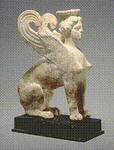
I always finds funerary customs fascinating. (Naturally, since my ancestor, the Great Sphinx, was once a tomb.)

Wednesday, November 01, 2006

Memento Mori: All Saints Day

I have lived most of my life in the New Orleans area. One of our local customs is the celebration of All Saints Day, November 1, on which the living remember the dead.

It's a tradition arising from the Catholic faith. For Catholics, All Saints Day is a holy day of obligation: Catholics are required to attend Mass on the day. In addition, traditionally they refurbished their family tombs -- pulling weeds, whitewashing or cleaning the headstone or tomb, decorating the grave with flowers, praying for the departed. When I was growing up in the 1950s and '60s, schools, government offices, and local businesses were closed to allow families to pursue this devout tradition.

Over the last few decades, however, lifestyles and funeral customs have changed. Many people no longer observe All Saints Day. Schools, even Catholic schools, no longer take a holiday for it. Most government offices remain open (although most state courts still close). Businesses ignore the day. Cremation has become more common, so fewer people are interred after death. If cremated, their ashes may be scattered, or their family may keep the urn with the ashes at home. Others purchase a niche in a mausoleum in which to keep the "cremains." Even those who still have family tombs or cemetery plots no longer take care of them. Instead, they purchase perpetual care contracts and let the cemetery maintain the graves.

For New Orleans cemeteries, however, it is still the biggest day of their year. Crowds of people flow through the gates. For many this is likely their only visit to the family plot except for specific funerals.

I like All Saints Day. I like the idea of remembrance. I like to visit my family's plot in Metairie Cemetery and think about those who are buried there. Their names carved on the headstone are a visible link with them, a reminder of their lives. I like the peace of the cemetery and I like to wander around it, looking at the many fantastic or extravagant tombs, and meditating on those who had them built.

What I treasure about All Saints Day is our culture, which does not ignore death, but recognizes it as inevitable -- not to be escaped, but to be accommodated. In some other parts of the country, people are appalled by open-casket wakes, which are common here; or they are disgusted by funerals, preferring to ignore death and brush by it with little ceremony. To me, they are deep in denial. Our way is healthier. We remind ourselves that no one escapes death. By ritual and ceremony, we comfort ourselves on the loss of those we love. We contemplate and prepare for our own eventual entries into that "undiscovered country from whose bourn no traveler returns."

Memento mori...